MedGuard
Date
August, 2025 - November 2025
Role
Product Designer & Software Engineer (Capstone Project)
Company
MedGuard — Medicine Verification Mobile Application
Development · UX design · System architecture
Key Outcomes
How the MVP demonstrated a scalable approach to community-level medicine verification
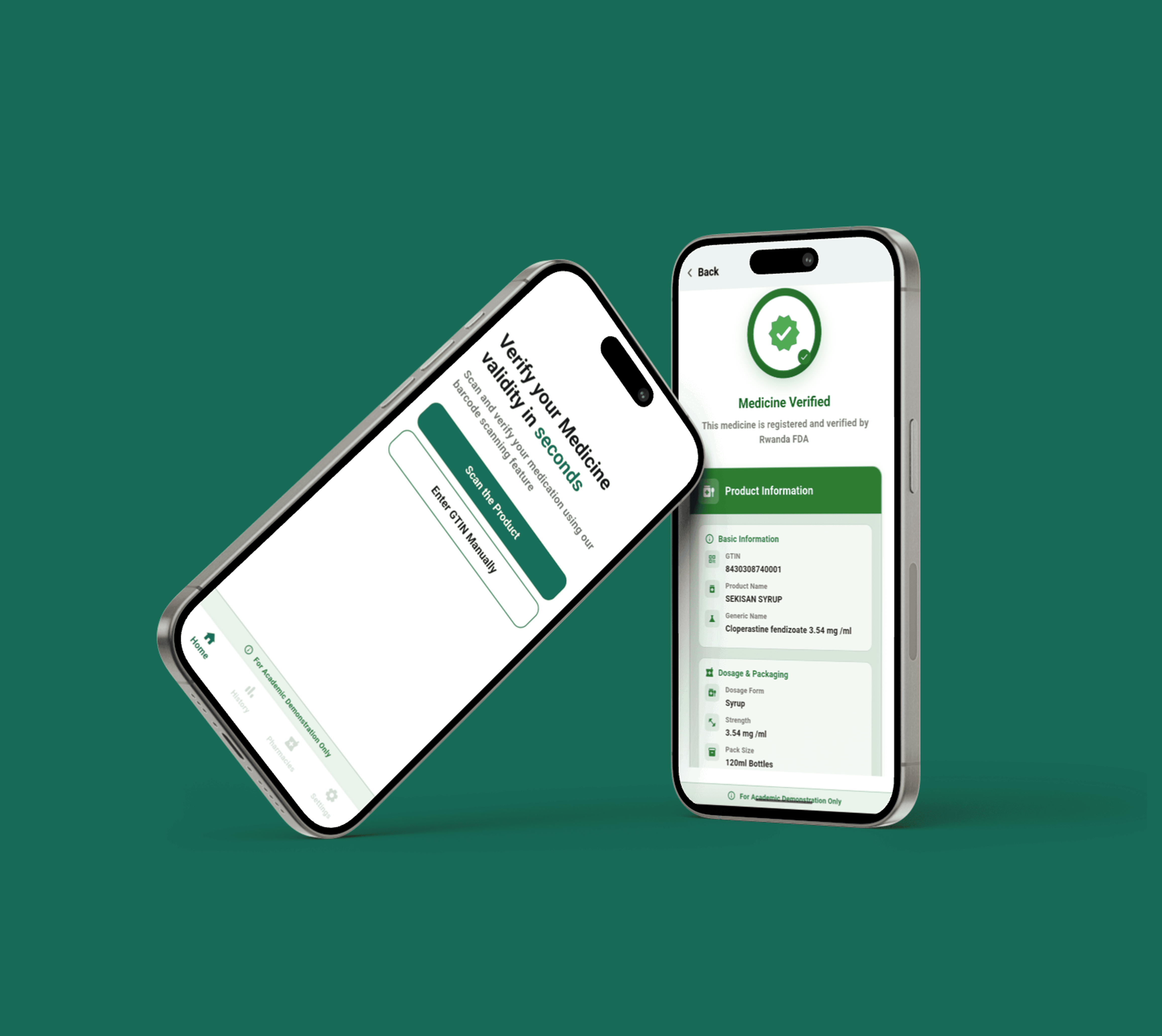
The MedGuard MVP demonstrated how medicine verification could be made accessible at the community level through a mobile application. By enabling barcode scanning, offline verification, and structured reporting of suspicious medicines, the system transformed regulatory datasets into a practical tool for consumers, pharmacists, and community health workers.
The platform allows users to verify medicines within seconds at the point of sale, even in low-connectivity environments. It also enables structured reporting of suspicious products and provides a directory of verified pharmacies to help users source medicines from trusted outlets.
As a GTIN-compliant mobile application, MedGuard demonstrates how pharmaceutical traceability standards can be translated into a scalable, user-friendly verification system.
Background
Substandard and falsified (SF) medicines are a major public health challenge, particularly in low- and middle-income countries.
The World Health Organization estimates that 1 in 10 medicines in these regions may be substandard or falsified, contributing to treatment failures, increased hospitalizations, and the acceleration of antimicrobial resistance (AMR). In fact, AMR is projected to cause up to 10 million deaths annually by 2050 if left unchecked.
In Rwanda, substandard antibiotics have been identified as a national public health concern. While the Rwanda Food and Drugs Authority (RFDA) has introduced pharmaceutical traceability standards using GS1 DataMatrix barcodes, existing verification tools are primarily designed for regulatory oversight rather than everyday use.
Most official medicine registers are distributed as PDF or spreadsheet documents, making them difficult for consumers, pharmacists, and community health workers to use in real-world situations.
To address this gap, I designed MedGuard, a proof-of-concept mobile application that enables users to verify medicines in real time through barcode scanning and structured reporting.
The Problem
Despite regulatory progress in pharmaceutical traceability, medicine verification at the community level remains limited. Several structural challenges make it difficult for consumers and frontline healthcare workers to verify medicines in real-world settings.
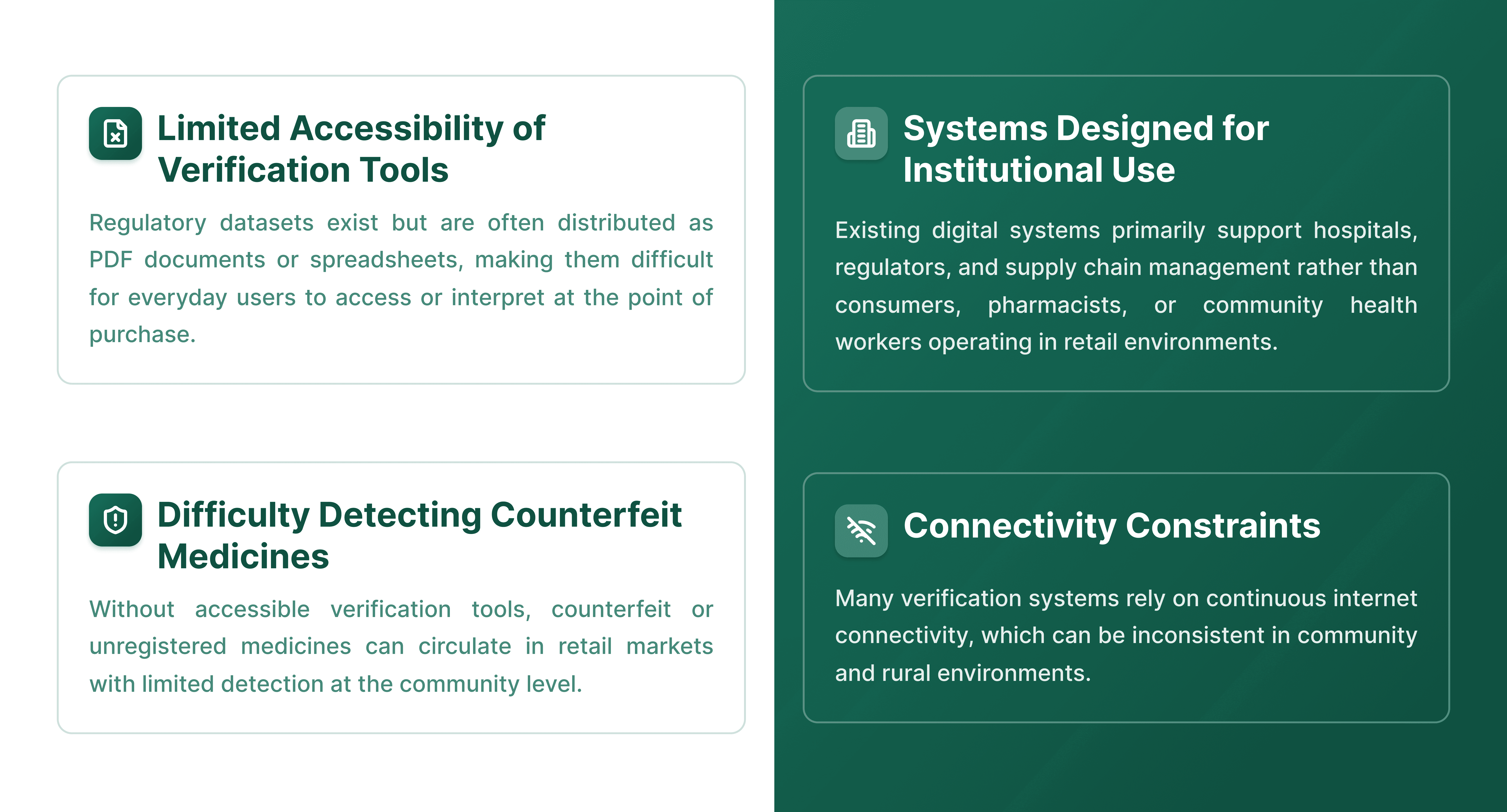
Together, these challenges create a critical gap in the last mile of medicine safety, where consumers and healthcare workers lack practical tools to verify medicines in real time.
Solution
MedGuard was designed as a GTIN-compliant mobile application that allows point-of-sale verification and reporting of pharmaceutical products in Rwanda and supports sourcing medicines only from verified pharmacies.
The MVP focused on three core capabilities.
1. Instant Medicine Verification
Users can scan GS1 barcodes or manually enter GTIN identifiers to verify a medicine's registration status.The system retrieves and displays key regulatory information, including:
Product name
Manufacturer details
Registration validity
Expiry information
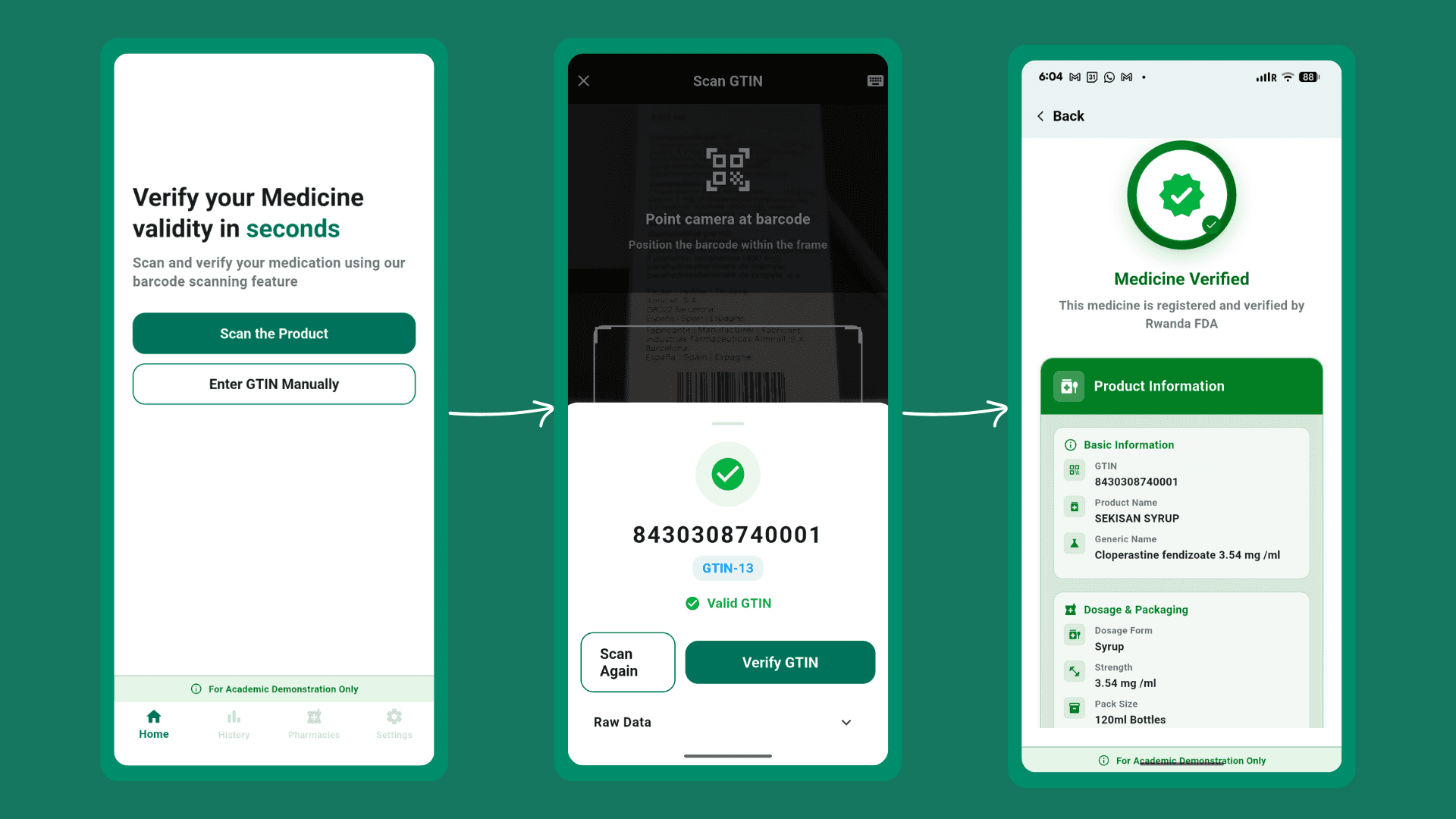
This allows users to confirm whether a medicine is legitimate before using or purchasing it.
2. Offline-First Verification
Because connectivity is inconsistent in many areas, the system was designed with an offline-first architecture. Medicine datasets are cached locally on the device using a lightweight database, allowing verification to occur even without internet access.
When connectivity becomes available, the application synchronizes with cloud databases to update records.
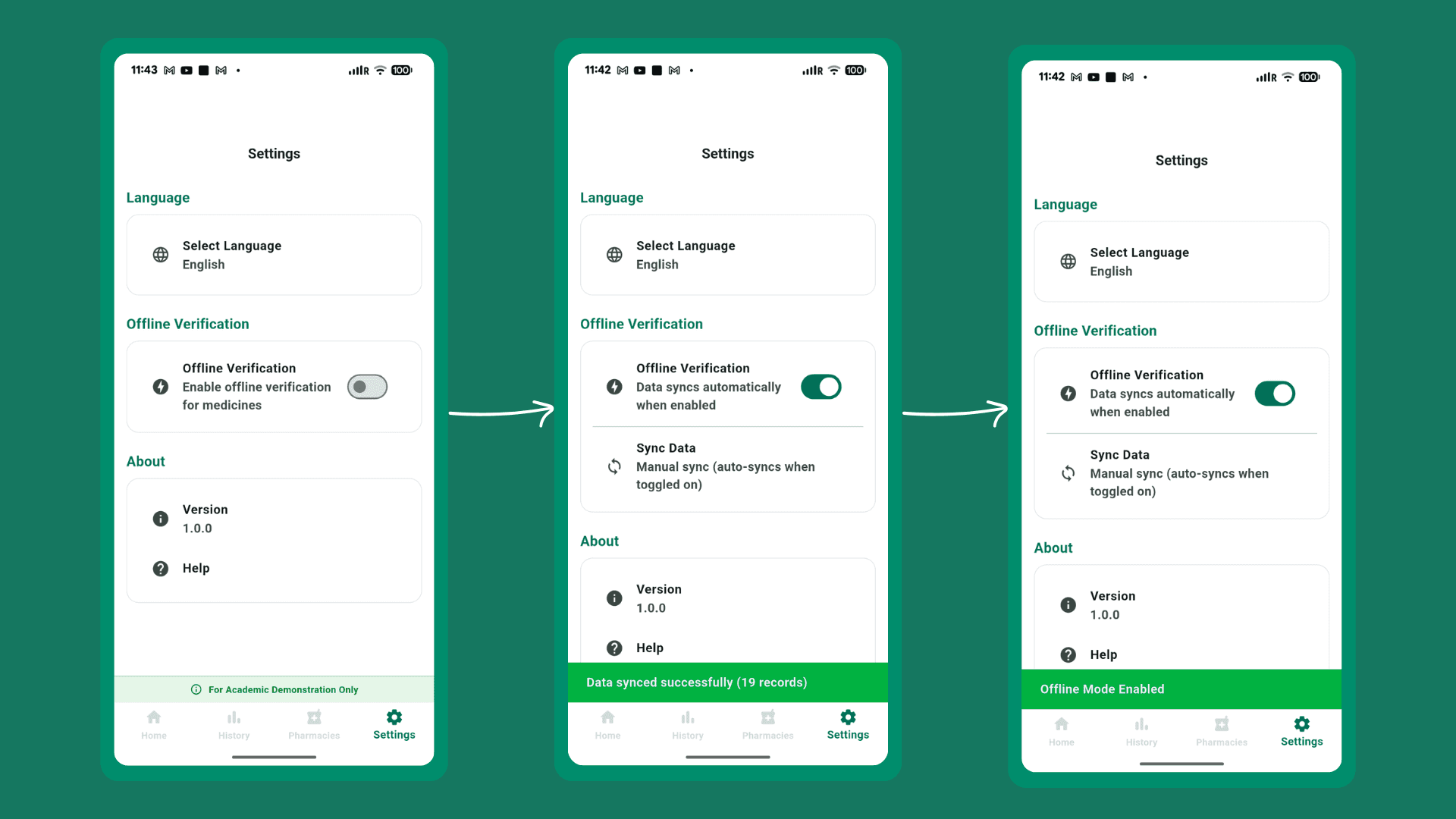
This ensures reliable functionality across both urban and rural environments.
3. Structured Reporting of Suspicious Medicines
When a medicine cannot be verified, users can submit a report directly through the app.
Reports include:
Photo evidence
GPS location
Batch and expiry information
Product identifier (GTIN)
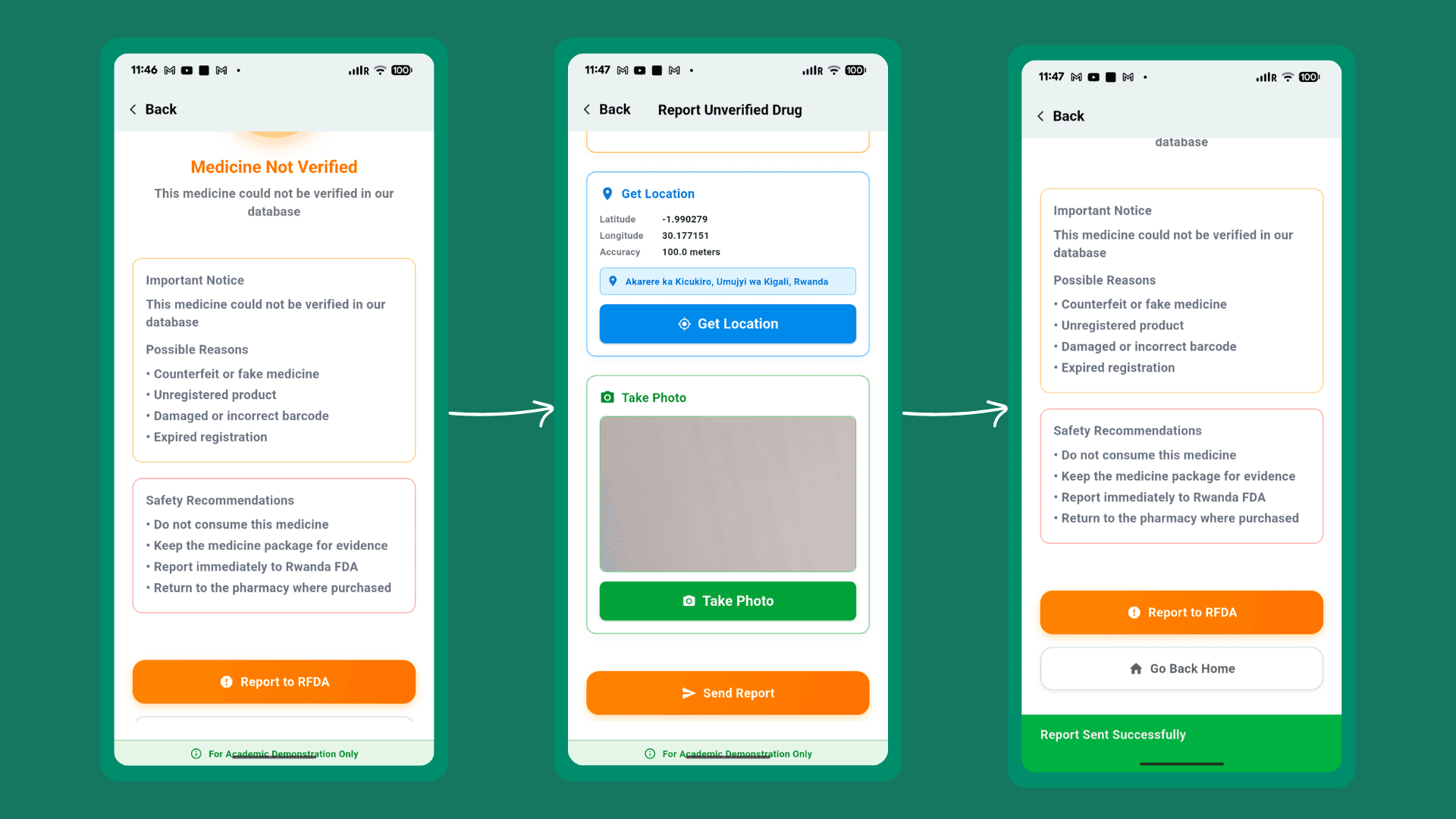
This structured reporting system creates actionable data that can support regulatory monitoring and investigation.
Designing for Multiple Stakeholders
Rather than designing a single linear user flow, the system was structured around the roles that exist within the pharmaceutical ecosystem.
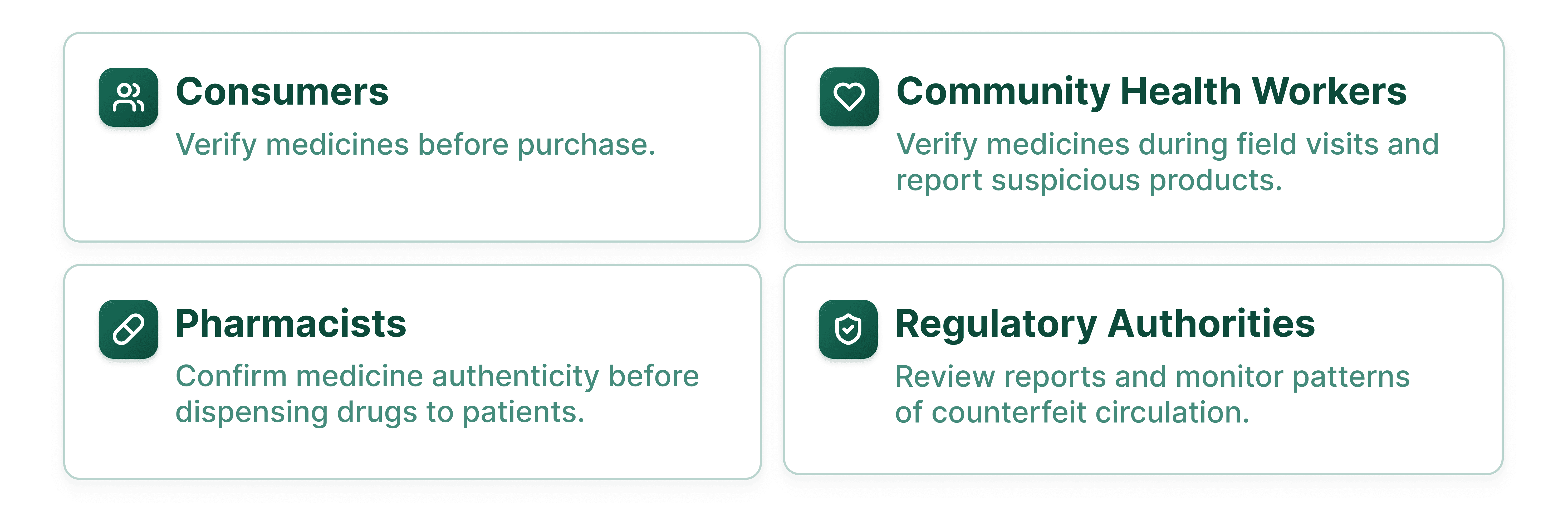
This role-based structure allowed the platform to support both public safety and regulatory oversight.
Admin Dashboard - Supporting Regulatory Oversight
While the mobile app focuses on empowering citizens and healthcare workers, regulators also require tools to monitor reports and maintain the medicine registry.
To support this, I designed and built an administrative dashboard that enables regulatory authorities to oversee platform activity.
Reviewing Suspicious Medicine Reports
Reports submitted by users appear in the admin dashboard where regulators can review:
Photo evidence of medicines
Reported GTIN identifiers
Batch and expiry information
GPS location of the report
By aggregating reports, regulators can identify patterns of counterfeit circulation, such as repeated reports from specific locations or products.
Monitoring Verification Activity
The dashboard also provides visibility into verification activity across the system.
Administrators can:
Track the number of verification attempts
Monitor suspicious product reports
Identify potential counterfeit hotspots
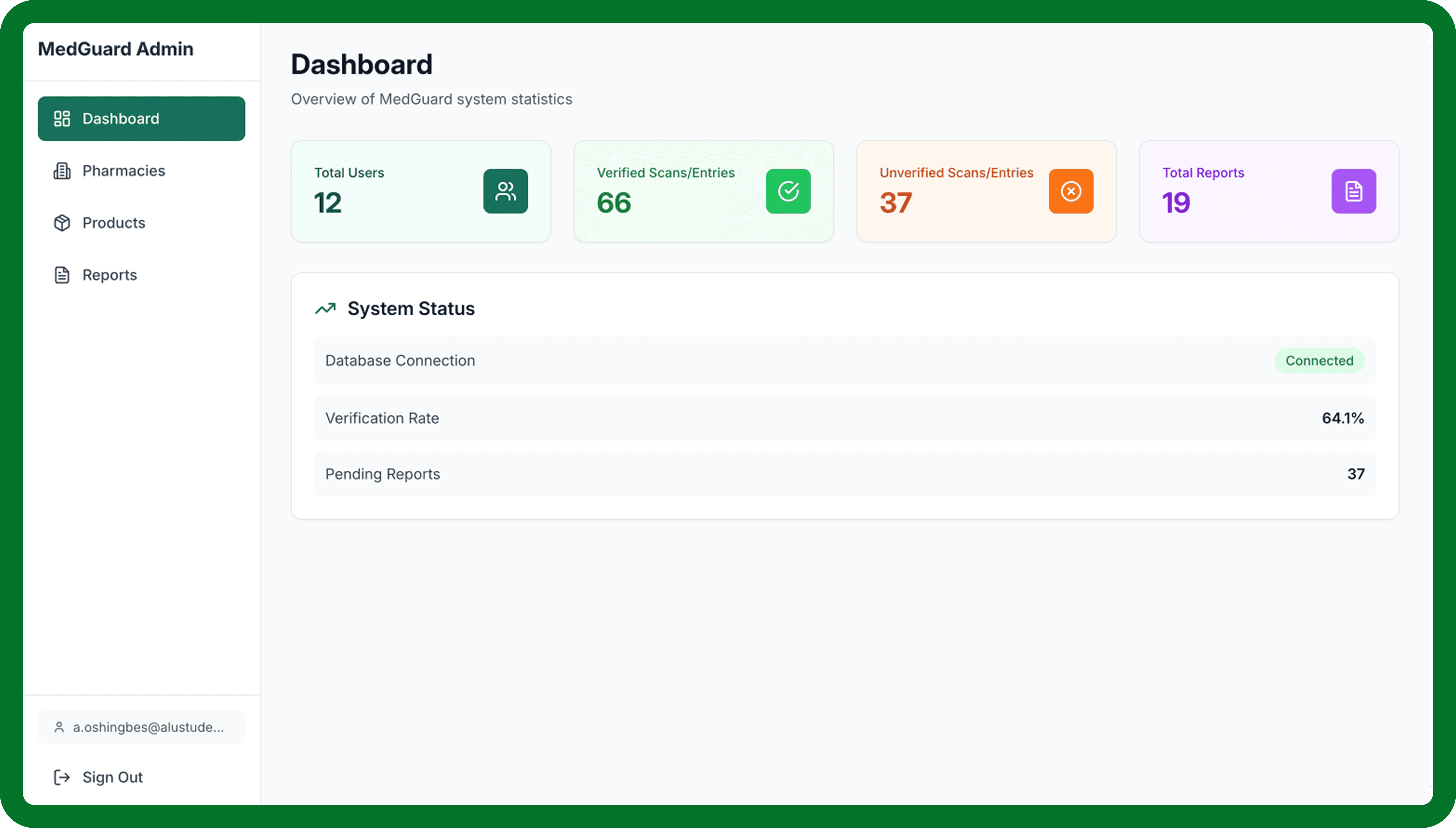
This transforms MedGuard into a monitoring tool rather than just a verification tool.
Managing the Medicine Registry
The verification system depends on an accurate medicine database.
The dashboard allows administrators to:
Add new medicines to the registry
Update product information
Remove outdated or incorrect medicine records
This ensures the verification system remains accurate and aligned with regulatory datasets.
Product Architecture
The system architecture was designed around three core layers.
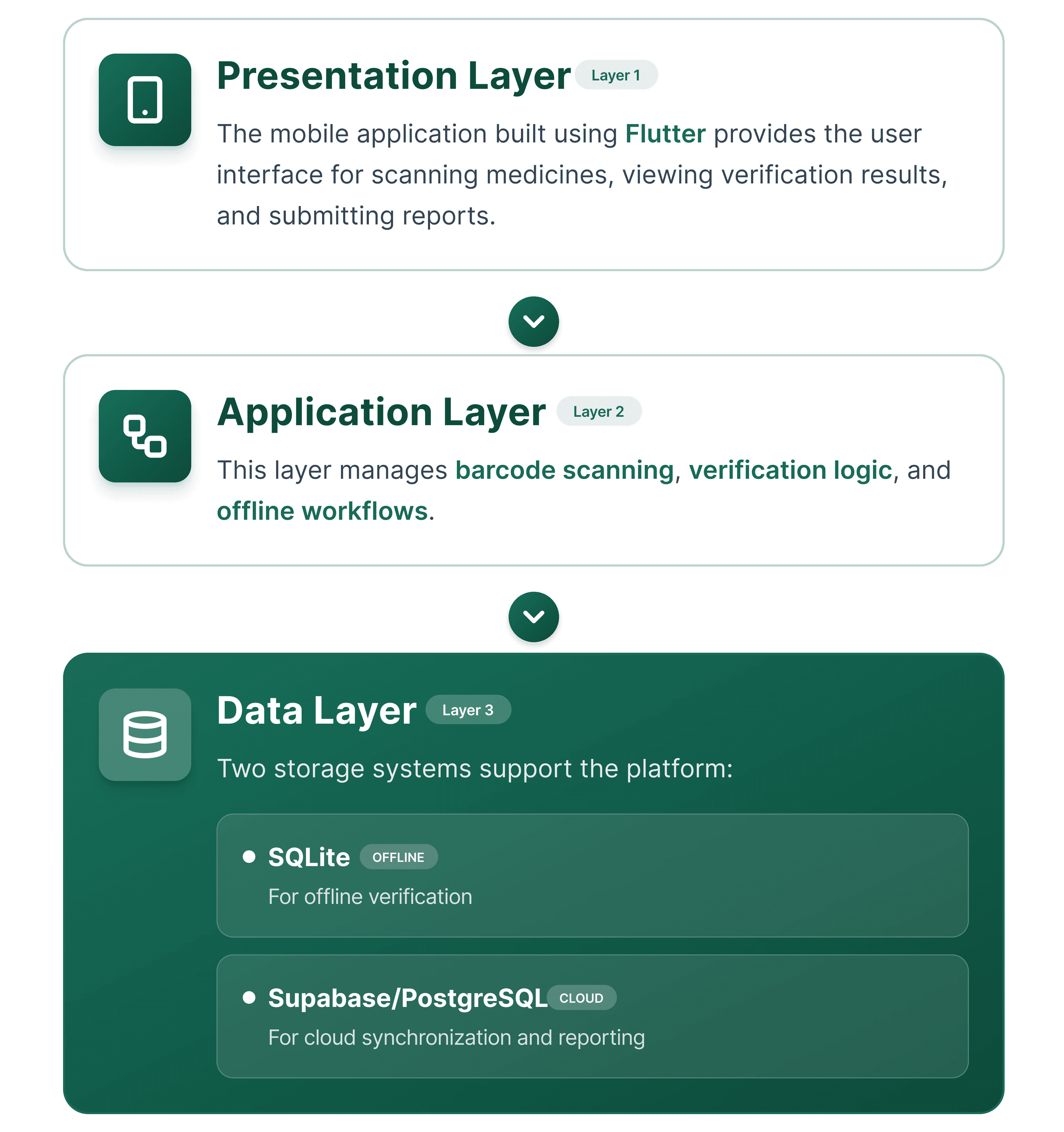
This hybrid architecture enables both fast local verification and centralized reporting.
Key Product Decisions & Trade-offs
Designing MedGuard required balancing usability, technical feasibility, and regulatory constraints.
Offline-First Architecture
Because many community environments have unstable internet connectivity, the system prioritizes offline verification using locally cached datasets.
Trade-off:
Offline data may become outdated until the next synchronization.
Structured Reporting Instead of Free-Text Reports
Reports require specific fields such as GTIN identifiers and photos.
This ensures reports are structured and useful for regulators.
Trade-off:
Some users may find structured reporting slightly more time-consuming.
Lightweight MVP Scope
The project focused on antibiotics and essential medicines rather than the entire pharmaceutical catalog.
Trade-off:
The MVP validates the concept but does not yet cover all medicine categories.
Outcomes & Validation
A functional MVP of MedGuard was developed and tested during the capstone project.
Testing demonstrated that the system could:
Successfully scan GS1 barcodes
Perform verification within seconds
Operate reliably in offline environments
Capture structured reports with images and GPS metadata
Pilot testing with a small group of participants in Kigali confirmed that the system could support fast and intuitive verification workflows.
The project validated the feasibility of using mobile technology to strengthen community-level medicine verification.
Reflections & Next Steps
Designing MedGuard highlighted the importance of balancing technical capability with real-world usability, particularly in healthcare systems where digital literacy varies widely.
The MVP focused on delivering the most critical features: verification, offline access, and reporting.
Future development could include:
Real-time integration with national pharmaceutical APIs
Enhanced counterfeit detection analytics
Expanded medicine databases
Real-time delivery and verification notifications
With continued development and regulatory collaboration, MedGuard could evolve into a scalable platform supporting national pharmaceutical safety initiatives.